-1.png?t=1618867322)
How to Design a Three-Hole Practice Green
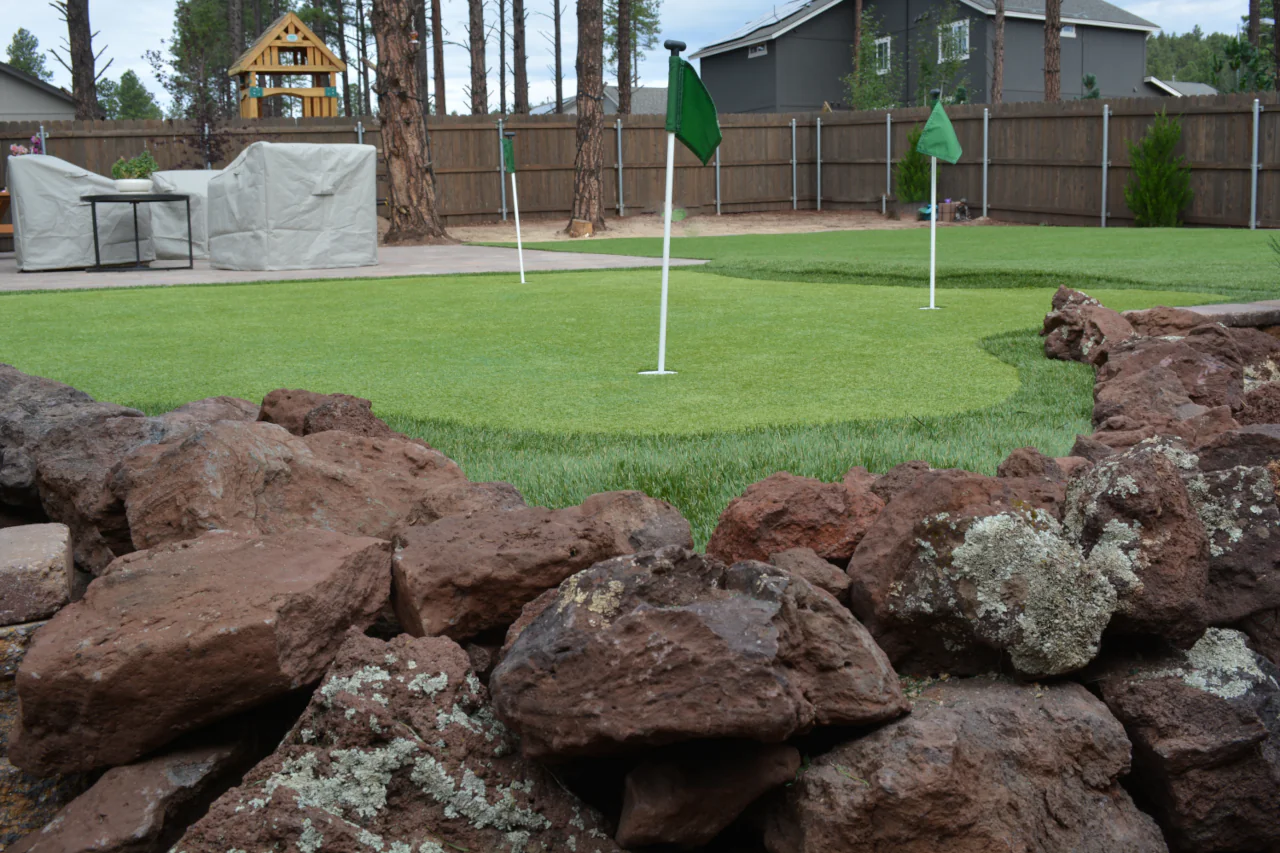
A three-hole practice green gives you a small-space-friendly way to boost your short-game performance without consuming all your outdoor space. This guide covers a smart layout, beginner-friendly pin placement ideas, which synthetic turf types work best for a backyard putting green setup, and quick, repeatable drills. Sprinkle in a bit of imagination and a regular practice schedule, and you’ll be developing smoother, more confident strokes in no time.
CHOOSING THE RIGHT SIZE AND SHAPE FOR YOUR YARD
Start by finding a flat or softly sloping spot that doesn’t interfere with driveways, flower beds, or heavy foot traffic. A typical three-hole green can require 300–700 square feet, depending on how much spacing you want between the holes. Think of three zones that create interesting angles: a straightforward short putt, a mid-range putt over a shallow slope, and a challenging long-break putt.
If you opt for a full synthetic grass installation, pick a spot with good sun exposure and consider how the runoff will drain there. Proper base work keeps the surface smooth and helps the turf mimic true putting conditions. If you’re short on space, alternate hole positions so each one feels different without needing much extra material.
LAYOUT TIPS FOR BETTER PRACTICE
Vary distances: aim for one close putt (6–10 ft.), one medium (12–18 ft.), and one extended putt (20–35 ft.). That range necessitates different putting speeds and focus.
Use subtle contours: small bumps or gentle hollows add variety without requiring major grading.
Create approach area options: include a small chipping patch beside one hole so you can practice pitch-and-putt combinations.
Edge details: a low-profile roll-up edge or bunker accent adds challenge and visual definition.
Throughout the layout process, share your preferred installation style — whether you want a full synthetic turf base or a partial renovation — because artificial grass and artificial turf behave differently depending on prep work.
PIN PLACEMENT IDEAS FOR VARIETY
Rotate pin locations every session. Move pins forward, back, and to the sides to create fresh angles. A simple system: ABC pin rotation where A = forward, B = center, C = back-third. For extra challenge, place a temporary pin on the edge of a subtle slope to strengthen break and pace judgment.
Use removable cups or movable pin sets so you can change locations without damaging the turf. Changing pins on synthetic turf putting greens is easy and lets you mimic tournament challenges in a Metro New York backyard setting.
SHORT PRACTICE ROUTINES FOR BUSY LIVES
No need for hour-long sessions. Try three simple drills that fit the three-hole layout:
Speed Ladder (6–12 minutes): Start at the short hole and putt three balls from each distance band—short, mid, long—focusing on a steady stroke length for each distance.
Break Read Drill (8–12 minutes): From a set position, putt to each of the three holes with the pin in a different spot. Work on judging the break and controlling speed.
Pressure Finish (5–8 minutes): Make two-putt cycles around the three holes. If you complete the circuit successfully, reward yourself with a more difficult position next round.
Short routines like these keep progress steady and make practice repeatable. Mix them over several days for full-scope training.